
About
Summary
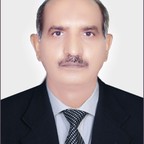
My name is Muhammad Ashraf residing in Pakistan and I retired during 2020 from the post of Principal Scientist placed in the Rice Breeding Program, Plant Breeding & Genetics Division, NIAB, Faisalabad, Pakistan. I completed my Ph. D. degree in Botany (Thesis: Assessment of genetic variation and inheritance of yield and yield related traits in lentil (Lens culinaris Medik.) from University of the Punjab, Lahore, Pakistan and M. Sc. degree in Botany (Thesis: Radiation studies in lentil (Lens culinaris Medik.) from University of Agriculture, Faisalabad, Pakistan.
I worked in Plant Breeding & Genetics Division (then Mutation Breeding Division) at the Nuclear Institute for Agriculture and Biology (NIAB), an establishment of Pakistan Atomic Energy Commission in Agriculture for 37 years in different positions during the time and on different plant species. I worked as a Principal Scientist (Plant Breeding & Genetics) for five years (2015-2020) at the same R&D institute. During my whole scientific career in field crops research, I worked on cereals (Wheat/Triticale and Rice) and pulses (Chickpea, Mungbean, Mashbean and Lentil). I worked on Chickpea, Wheat/ Triticale Improvement for a few years and afterwards (1986-2001) my research assignments were shifted to Pulses crops (Mungbean, Mashbean and Lentil) during 1986-2001, then on rice crop (2001-2020). The majority of my research applied field and lab-in-the-field experiments. My objective as a plant breeder was to improve the quality and sustainability (both environmental and economics of the end-users) of life by developing plants that fit better into the natural world and produce more with less either through conventional breeding or through mutation breeding/ other related techniques. This is not a task that any individual can undertake alone or that will ever be finished, as new challenges and opportunities constantly arise. Towards my objective, I worked with partners with diverse skill sets, interests, and backgrounds. Among my most important partners, leading to some of my most significant and longest lasting impacts, were farmers’ community (endusers), whom I learnt from and also taught by rendering extension services about the newly developed plant varieties.
During my long service in different positions, I have developed a strong understanding of the plant breeding processes, and the challenges involved. I am familiar with the latest breeding techniques/ mutation breeding and other related breeding technologies, and I have worked on a variety of international research projects (IAEA CRP Projects on heat and drought stresses) and international FAO/IAEA expert missions to train the staff and shape the breeding programs in Sri Lanka and Fiji during my career. I have a proven track record of success in developing new plant varieties of Rice, Mungbean, Lentil and a patent in rice (details in CV). I have also worked on improving existing varieties/creating induced variability in rice crop by increasing their resistance to bio-/a-biotic stresses (heat, drought, BLB disease). Recently, we have released four rice varieties of which two are thermo-tolerant mutant varieties developed under an FAO/IAEA-CRP project (16589) of which I was the Chief Investigation Officer.
I have a strong background in plant breeding & genetics, and have the experiences working with a variety of plant species (cereals and legumes). I am an enthusiastic, motivated and results-oriented researcher to formulate and implement the breeding program for the future goals and eager to utilize my skills and experience in a new challenging, multidisciplinary and diverse environment. I wish to do work on cereals and legumes crops improvements utilizing my skills, and expertise might able me to shape a sound breeding program(s) that would be beneficial to the end-users.
Research and education goes together for the betterment of future. Today we are in good conditions because of good research in the past and present. Similarly, for securing a better future we need to do outstanding research. For this research I did things systematically as follows;
Planning and designing the research projects (keeping in view the problems faced by the
concerned stakeholders), writing proposals, creating funding, training manpower, and improving
the livelihood of the end-users etc.
Executing and implementation of the project, facing the problems and solving, standby solutions,
and working towards the target(s)/and gaining experience.
Working with greenhouse and field crew personnel’s in a plant research and seed production environment.
Developing the data management and data analysis procedures (protocols).
Evaluating research field trials and assisting with plant selection.
Conducting efficiently and competently DNA extraction from plants to verify fertility and that
cross contamination has not happened.
Implementing qPCR diagnostic assay for detection & quantification of DNA.
After getting results, publishing, patenting, implying in industry which all lead to humanity
development (end-users).
Doing research, sharing the knowledge providing consultancy services to seed production
industry, and others (end-users-farmers’ community), dissemination of the findings through
trainings of students/farmers’ fields and motivating to achieve the targets for their great future
are the important things.
Using farmers' participatory approach to identify new varieties and seed production.
Producing basic and pre-basic (breeder seeds) seeds.
I was awarded with Certificate of Merit for outstanding contribution towards the Rice Improvement Programme of the Commission by the Chairman, Pakistan Atomic Energy Commission during 2018.
Positions
Principal Scientist (Rice Improvement Proramme) Plant Breeding & Genetics Division Dec 2015 - Dec 2020
Nuclear Institute for Agriculture and Biology (NIAB), Pakistan Atomic Energy Commission (PAEC)
Responsibilities:
-Planning and designing of research projects (keeping in view the problems faced to concerned stakeholders), writing proposals, creating funding, training manpower.
-Executing and implementing the project, facing the problems and solving, standby solutions, and working towards the target(s)/and gaining experience.
-Working with greenhouse and field workers in a plant research and seed production environment.
-Developing data management and data analysis procedures (protocols).
-Evaluating research field trials and assisting with plant selection.
-Conducting DNA extraction from plants to verify fertility of the cross contamination.
-Implementing qPCR diagnostic assay for detection & quantification of DNA.
-Publishing, patenting, sharing knowledge providing consultancy services to seed industry, end-users,
dissemination of findings through trainings and motivating to achieve the targets.
-Working in a dynamic environment that calls for adaptability, flexibility, and effective collaboration.
ACHIEVEMENTS
2001-2020:
Engaged with the Rice Improvement Program
Evolution/Release of varieties/Patents
NIAB Basmati-HT18: This variety is thermo-tolerant.
NIAB Basmati-HT39: This variety is thermo-tolerant
NIAB ST-9: This is a long grain coarse rice high yielding and lodging resistant variety.
NIAB RC-195: This is a long grain coarse rice high yielding and lodging resistant variety.
Noor Basmati: This variety has extra long grains (>7.5mm) and matures 1-2 weeks earlier, suitable for Rice-Wheat & Rice-Potato cropping systems.
NIAB Basmati-2016: This variety matures 2-3 weeks earlier, and more suitable for Rice-Potato & Rice-Wheat cropping systems.
NIAB Super: This is a long grain and normal duration Basmati variety.
NIAB-2013: This is high yielding, drought, salinity and heat tolerant Coarse rice variety with wider water adaptability, resistant to lodging.
Patent (142572) of bio-fortified Basmati rice: First Basmati mutants showing 53-58% available in-organic phosphorus (Pi) were patented as "Novel Development of Low Phytate Mutants" by the Intellectual Property Organization (IPO), Pakistan.
Development of thermo-tolerant rice mutants: Under IAEA-CRP 16589, eleven mutants were developed .
Development of drought tolerant rice: Under IAEA-CRP 22224, 24 drought tolerant mutants were developed.
Development of flood tolerant rice: Several early maturing flood tolerant mutants have been isolated.
Senior Scientist (Rice Improvement Programme) Plant Breeding & Genetics Division Dec 2006 - Nov 2015
Nuclear Institute for Agriculture and Biology (NIAB), Pakistan Atomic Energy Commission (PAEC)
-Responsible for execution and documentation of assigned R & D activities for Rice breeding.
-Responsible to interact with members of group for completion of a goal.
-Responsible to design and manage methodologies for activities under the schedule of concerned research assignments in due course of time.
-Dissemination of achievements and technology transfer (writing of reports, research publications, presentations, writing of material for varietal approval/patents etc.).
-Supervise the research activities of the graduate & post-graduate students/ research fellows in the group.